Mostrando entradas con la etiqueta Pantanal. Mostrar todas las entradas

viernes, 24 de mayo de 2024

AGOSTO 2023: BRASIL / BRAZIL (7/9) - PANTANAL SUR: PASSO DO LONTRA (MATO GROSSO DO SUL)

Etapas del viaje / Trip sections:


7. Passo do Lontra.

Salida en barca por el río Miranda / Bout tour through Miranda river

Alrededor de Miranda, tanto hacia el este como hacia el oeste, aparecen diversas "fazendas" donde es posible alojarse y participar en algunas de las múltiples actividades que ofrecen. Ahora bien, su precio suele ser prohibitivo. Nosotros nos dirigimos hacia Passo do Lontra, perteneciente al municipio de Corumbá, ya cerca de la frontera con Bolivia. En Passo do Lontra hay varios alojamientos más asequibles y que también ofrecen sus paquetes de actividades. Aquí merece la pena añadir que el sur del Pantanal está mucho más concurrido y dedicado al turismo, con lo que las actividades están más dirigidas al público general que al naturalista. En cualquier caso, el ecosistema es similar al que habíamos observado en el norte, con algunas especies coincidentes. Nos alojamos durante 2 noches en el Pantanal Jungle Lodge, cuyas actividades no me acabaron de agradar. Desde luego, el esfuerzo para encontrar las distintas especies no se parecía en nada al disfrutado con Djalma o incluso en Projeto Salobra.

Around Miranda, both to the east and to the west, there are various "fazendas" where it is possible to stay and participate in some of the many activities they offer. However, their prices tend to be prohibitive. We headed towards Passo do Lontra, part of the municipality of Corumbá, near the border with Bolivia. In Passo do Lontra, there are several more affordable accommodations that also offer activity packages. It is worth noting that the southern Pantanal is much more crowded and dedicated to tourism, so the activities are more geared towards the general public rather than naturalists. In any case, the general ecosystem is similar to what we had observed in the north, with some overlapping species. We stayed for 2 nights at the Pantanal Jungle Lodge, but I didn't particularly enjoy their activities. Certainly, the effort to find the various species was nothing like what we experienced with Djalma or even at Projeto Salobra.

La crónica de viaje en eBird, el mapa de las principales zonas visitadas, y la lista completa de especies de aves observadas durante este viaje, puede encontrarse en este enlace.

The trip report in eBird, the map showing the main visited locations, together with the complete list of bird species observed in this trip, can be seen in this link.

Mapa de las zonas visitadas en el viaje / Map showing areas visited during the trip

Localización del Passo do Lontra / Location of Passo do Lontra

1. Pantanal Jungle Lodge, Passo do Lontra.

Como a lo largo de todo este viaje, el propio alojamiento se encuentra en una zona privilegiada. Bordeado por el río Miranda y rodeado de bosque y marisma, las oportunidades de ver aves y algún que otro mamífero, como los ubicuos capibaras. Los jabirús americanos se movían por los jardines, y en los comederos varias especies, incluidas palomas montaraces comunes y coloradas, cotorras argentinas o tordos gigantes. Lo mejor de todo fue la observación de un adulto y una cría de búho americano, así como una anaconda amarilla saliendo del río.

As throughout this trip, the accommodation itself is located in a privileged area. Bordered by the Miranda River and surrounded by forest and marshland, there are ample opportunities to see birds and the occasional mammal, such as the ubiquitous capybaras. Jabirus roamed the gardens, and various species frequented the feeders, including white-tipped and pale-vented doves, monk parakeets, or giant cowbirds. The highlight was observing an adult and a juvenile great horned owl, as well as a yellow anaconda emerging from the river.

Red de caminos alrededor de Passo do Lontra / Trails around Passo do Lontra

Cotorra argentina / Monk parakeet (Myiopsitta monachus)

Golondrina pechigrís / Grey-breasted martin (Progne chalybea)

Paloma montaraz común / White-tipped dove (Leptotila verreauxi)

Pato criollo / Muscovy duck (Cairina moschata)

Paloma colorada / Pale-vented pigeon (Patagioenas cayennensis)

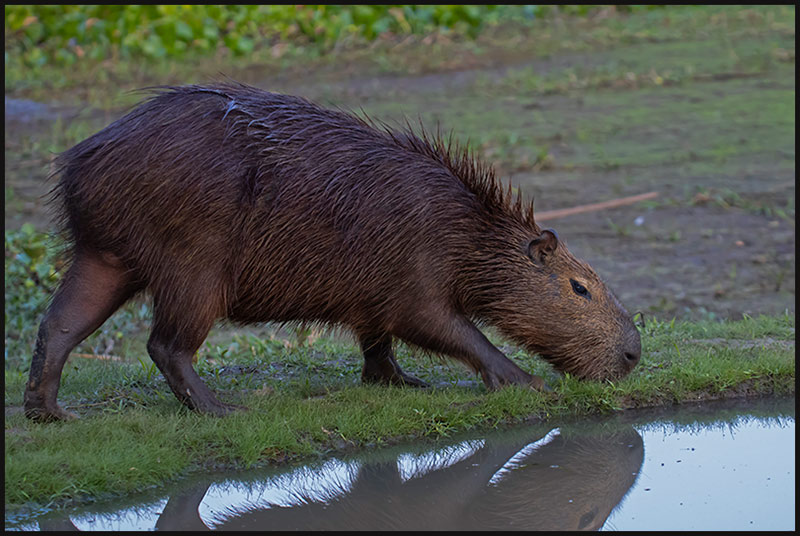
Capibara / Greater capybara (Hydrochoerus hydrochaeris)

Tordo gigante / Giant cowbird (Molothrus oryzivorus)

Picoguadaña piquirrojo / Red-billed scythebill (Campylorhamphus trochilirostris)

Rana arborícola lechosa / Veined tree frog (Trachycephalus typhonius)

Varillero congo / Chesnut-capped blackbird (Chrysomus ruficapillus)

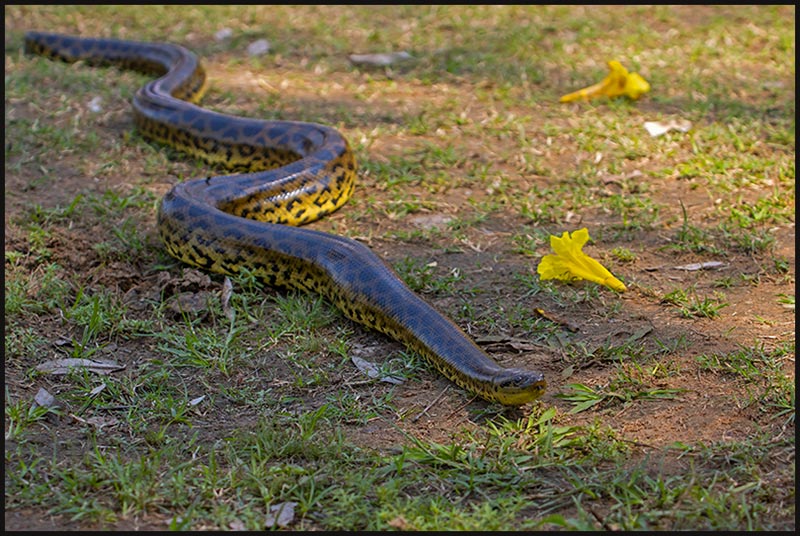
Anaconda amarilla / Yellow anaconda (Eunectes notaeus)

Anaconda amarilla / Yellow anaconda (Eunectes notaeus)

Tangara picoplata / Silver-beaked tanager (Ramphocelus carbo)

Tordo músico / Grayish baywing (Agelaioides badius)

Mariposa tronadora gris / Gray cracker (Hamadryas februa)

Carpintero real norteño / Green-barred woodpecker (Colaptes melanochloros)

Búho americano / Great horned owl (Bubo virginianus)

2. Salida en barca por el río Miranda / Bout tour through Miranda river.

La salida en barca sin duda es de lo mejorcito que ofrencen en el alojamiento. Aquí nos sorprendió ver un águila pescadora, que no esperaba en esta época del año. Por lo demás, las especies muy similares al norte del Pantanal. Eso sí, fuimos testigos de un anochecer espectacular.

The boat trip is undoubtedly one of the best things the accommodation offers. We were surprised to see an osprey, which I did not expect at this time of year. Otherwise, the species were very similar to those in the northern Pantanal. However, we did witness a spectacular sunset.

Ruta por los ríos Miranda y Vermelho / Route through Miranda and Vermelho rivers

Iguana verde / Common green iguana (Iguana iguana)

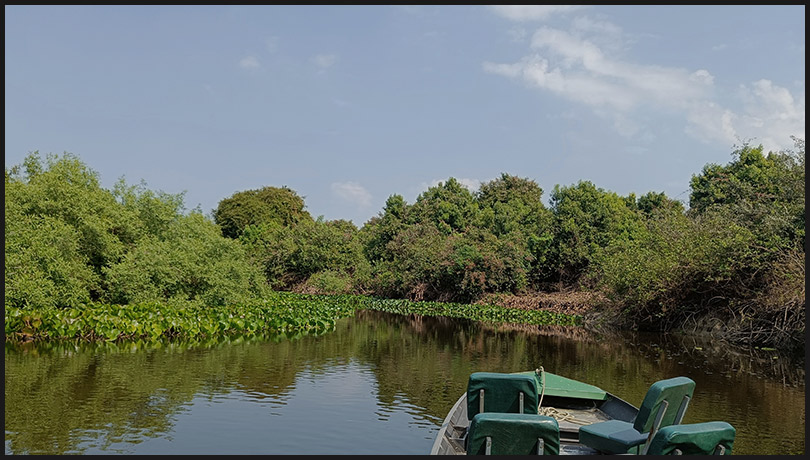
Salida en barca por el río Miranda / Bout tour through Miranda river

Martín pescador amazónico / Amazon kingfisher (Chloroceryle amazona)

Capibara / Greater capybara (Hydrochoerus hydrochaeris)

Salida en barca por el río Miranda / Bout tour through Miranda river

Jabirú americano / Jabiru (Jabiru mycteria)

Mono aullador carayá / Black-and-gold howler (Alouatta caraya)

Águila pescadora / Osprey (Pandion haliaetus)

Anochecer en el río Miranda / Sunset at Miranda river

Anochecer en el río Miranda / Sunset at Miranda river

3. Ruta a pie al norte de la Estrada Pantanal Sul / Walking trail in the north of Estrada Pantanal Sul.

Una de las mañanas nos dirigimos hacia el norte, siguiendo la carretera Estrada Pantanal Sul. Por el camino se dejó ver alguna especie interesante, como una corzuela (entre los mamíferos), un carpintero blanco y un tucán toco. Al final, hicimos una pequeña caminata, que sirvió para ver alguna especie nueva, como los guacamayos aliverdes y el copetón tiranillo, además de otras que ya habíamos observado, como el guacamayo acollarado.

One morning, we headed north, following the Estrada Pantanal Sul. Along the way, we spotted some interesting species, such as a common brown brocket (among the mammals), a white woodpecker, and a toco toucan. In the end, we went for a short hike, which allowed us to see some new species, such as the red-and-green macaws and a brown-crested flycatcher, in addition to others we had already observed, like the yellow-collared macaw.

Ruta por la Estrada Pantanal Sul / Route through Estrada Pantanal Sul

Tegu blanco y negro / Black-and-white tegu (Salvator merianae)

Tucán toco / Toco toucan (Ramphastos toco)

Corzuela / Common brown brocket (Subulo gouazoubira)

Ruta a pie / Walking route

Guacamayo aliverde / Red-and-green macaw (Ara chloropterus)

Ruta a pie / Walking route

Mono aullador carayá / Black-and-gold howler (Alouatta caraya)

Guacamayo acollarado / Yellow-collared macaw (Primolius auricollis)

Chaco spiny lizard (Tropidurus lagunablanca)

Ruta a pie / Walking route

Busardo caminero / Roadside hawk (Rupornis magnirostris)

Copetón tiranillo / Brown-crested flycatcher (Myiarchus tyrannulus)

lunes, 20 de mayo de 2024

AGOSTO 2023: BRASIL / BRAZIL (6/9) - PANTANAL SUR: PROJETO SALOBRA (MIRANDA, MATO GROSSO DO SUL)

Etapas del viaje / Trip sections:


6. Projeto Salobra.

Salida en barca por el Río Salobra / Bout tour through the Salobra river

Concluida nuestra visita al parque nacional Chapada dos Guimeraes, tomamos un vuelo desde Cuiabá para dirigirnos a Campo Grande, en nuestro caso, tras escala en Sao Paulo. Campo Grande es una de las vías de entrada al sur del Pantanal, aquel perteneciente al estado de Mato Grosso do Sul. En el aeropuerto de Campo Grande alquilamos un coche y nos dirigimos hasta la ciudad de Miranda, donde nos alojamos esa noche. A la mañana siguiente teníamos concertada una visita a una reserva denominada Projeto Salobra.

After concluding our visit to the Chapada dos Guimarães National Park, we took a flight from Cuiabá to head to Campo Grande, in our case, with a layover in São Paulo. Campo Grande is one of the gateways to the southern Pantanal, which belongs to the state of Mato Grosso do Sul. At the Campo Grande airport, we rented a car and drove to the city of Miranda, where we stayed that night. The next morning, we had arranged a visit to a reserve called Projeto Salobra.

La crónica de viaje en eBird, el mapa de las principales zonas visitadas, y la lista completa de especies de aves observadas durante este viaje, puede encontrarse en este enlace.

The trip report in eBird, the map showing the main visited locations, together with the complete list of bird species observed in this trip, can be seen in this link.

Mapa de las zonas visitadas en el viaje / Map showing areas visited during the trip

Localización del Projeto Salobra / Location of Projecto Salobra

Projecto Salobra es una interesante iniciativa desarrollada por la comunidad local para favorecer la conservación de la zona, permitiendo una visita turística controlada que ayuda a su preservación. La visita incluye, básicamente, una salida en barca, similar a las que hicimos en el norte del Pantanal, e incluye, al finalizar, el típico almorço pantaneiro. Por otro lado, la zona que se encontruenta alrededor de la finca consiste en un paisaje agroforestal abierto que facilitó la observación de fauna. Es sin duda, una de las visitas que más me gustó en el sur del Pantanal.

Projeto Salobra is an interesting initiative developed by the local community to promote the conservation of the area, allowing a controlled touristic visit that helps in its preservation. The visit basically includes a boat trip, similar to those we did in the northern Pantanal, and included, at the end, the tipical almorço pantaneiro. Additionally, the area surrounding the property consists of an open agroforestry landscape that facilitated wildlife observation. With no doubt, this was one of the most interesting visits in south Pantanal.

Ruta en barca en Projecto Salobra / Bout tour in Projecto Salobra

La finca cuenta con una torre de observación y con diversos puntos de alimentación de aves que permiten observar algunas especies que no habíamos visto en la zona norte, como carpintero lúgrube, chara moñuda o caciques crestados. No tuvimos tiempo para explorar mucho alrededor, pero me pareció una zona muy interesante.

The property features an observation tower and various bird feeders that allow the observation of some species we hadn't seen in the northern area, such as the pale-crested woodpecker, plush-crested jays, and crested oropendola. We didn't have much time to explore the surroundings, but I found it to be a very interesting area.

Projeto Salobra, Miranda

Carpintero lúgubre / Pale-crested woodpecker (Celeus lugubris)

Cacique crestado / Crested oropendola (Psarocolius decumanus)

Chara moñuda / Plush-crested jay (Cyanocorax chrysops)

Amazona frentiazul / Turquoise-fronted parrot (Amazona aestiva)

Sin duda, uno de los atractivos de la finca es la salida en barca por el río Salobra, hasta alcanzar su desembocadura en el Miranda. La fauna era similar a la que ya habíamos visto en la zona norte, e incluía especies como garcillas azuladas, angús, avetigre coloradas, o diferentes especies de martines pescadores. Incluso se dejó ver unos segundos un jaguar que cruzó el río de forma fugaz.

Without a doubt, one of the main attractions of the property is the boat tour on the Salobra River, all the way to its mouth at the Miranda River. The wildlife was similar to what we had already seen in the northern area and included species such as striated herons, black-capped donacobius, rufescent tiger-herons, and various species of kingfishers. We even briefly spotted a jaguar that swiftly crossed the river.

Salida en barca por el Río Salobra / Bout tour through the Salobra river

Garcilla azulada / Striated heron (Butorides striata)

Angú / Black-capped donacobius (Donacobius atricapilla)

Avetigre colorada / Rufescent tiger-heron (Tigrisoma lineatum)

Salida en barca por el Río Salobra / Bout tour through the Salobra river

Martín gigante neotropical / Ringed kingfisher (Megaceryle torquata)

Busardo caminero / Roadside hawk (Rupornis magnirostris)

Ibis verde / Green ibis (Mesembrinibis cayennensis)

Martín pescador verde / Green kingfisher (Chloroceryle americana)

Desembocadura del Río Salobra en el Miranda / Mouth of Salobra river onto Miranda river

Jacana suramericana / Wattled jacana (Jacana jacana)

Jacana suramericana / Wattled jacana (Jacana jacana)

Garceta nívea / Snowy egret (Egretta thula)

Salida en barca por el Río Salobra / Bout tour through the Salobra river

Cormorán biguá / Neotropic cormorant (Nannopterum brasilianum)

Viudita dorsinegra / Black-backed water-tyrant (Fluvicola albiventer)

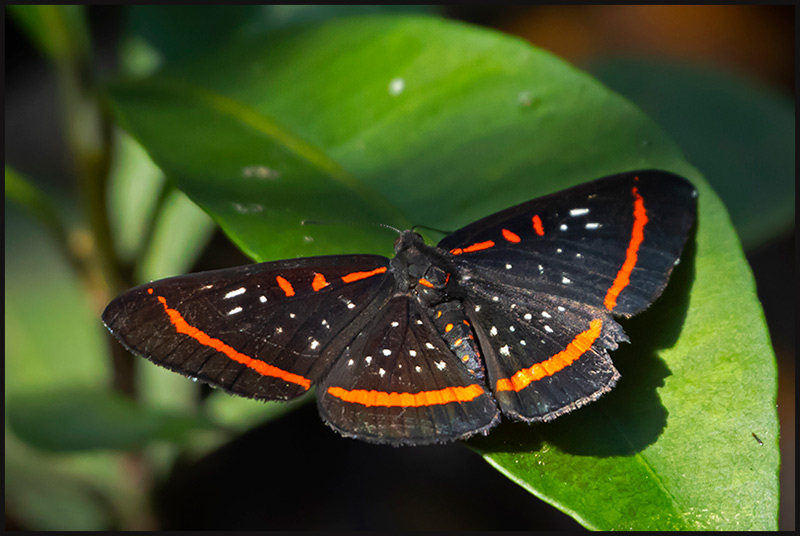
Red-barred amarynthis (Amarynthis meneria)